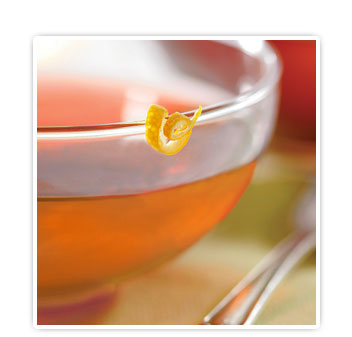
Legend has it that over 4700 years ago a fortuitous blunder caused a few dry leaves to accidentally fall into a pot of boiled water being prepared for an emperor in the hills of China. Since that time tea has exploded into the most popular beverage on the planet (other than, water). An out-and-out quest has been undertaken to discover which leaves on which plants brew the best tea.
After millennia of exploring, discovering and experimenting, the world of tea has become more vast and specialized than fine wine. Most wine is made from grapes and is generally classified as red, white and rose. Likewise, all tea comes from the tea bush Camellia Sinensis and is generally either Black, Oolong, Green or White. A fifth main category, herbal is technically not tea, as “herbal tea” refers to the world of wonderful infused beverages made from plants other than Camellia Sinensis. Sometimes the more precise word “tisane” may be used when refering to herbal infusions.
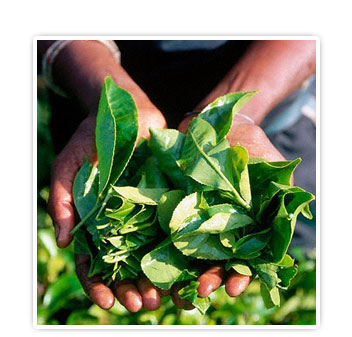
 Black tea is the most familiar tea type to North Americans and Europeans. The popular Earl Grey and English Breakfast are both black teas. Other teas less familiar to the Western world also abound, including smoky and seductive Lapsang Souchong, one of our most distinctive teas.
 The least processed teas are white teas. White teas contain only the buds and very young leaves of the tea plant. As a result, they are rarer and often more expensive. Their straightforward, yet delicate taste and health profile, similar to green teas, have helped them burst onto the Western tea scene in recent years.
 Green Tea, best known for its grassy vegetal notes and greenish liquor and leaves, is quickly steamed or pan-fired to denature the oxidizing enzymes, and to preserve its characteristic freshness. Without oxidation however, green teas must be steeped more carefully, as they can become bitter if steeped too long or at too hot a temperature. Green tea should never be steeped with boiling water. Near boiling or even cooler will produce much better results.
 Herbal Teas includes everything one can possibly steep or infuse in hot water that does not originate from the tea bush, Camellia Sinensis. This means that herbals are, by definition, not tea; rather they are more precisely called “tisanes”. However, many people are simply more familiar with the term “herbal tea” than with “tisane,” so herbal tea suits us just fine.